Winning isn't everything if you think that governing is the point.
Thursday, November 8, 2012
Here's an idea
We could work together to fix stuff and not just to win elections.
Winning isn't everything if you think that governing is the point.
Winning isn't everything if you think that governing is the point.


What it is
There's a very entertaining Twitter thread today about Nate Silver and his math magic that's developing as a super-nerd parody of the Chuck Norris tough guy jokes of recent years:
“The only reason Nate Silver runs statistical analyses on a computer is so he can
laugh when it's wrong.”
“Nate Silver does not breathe air; he just periodically
samples the atmosphere.”
One wag has also built a Web site that asks "Is Nate Silver a Witch?" (Conclusion? Likely he is -- there is no other plausible explanation for his uncanny ability to accurately predict yesterday's election.)
All this is due to Silver's NY Times blog, FiveThirtyEight, where he applies his extraordinary statistical abilities to political polling in the service of forecasting elections. In the run up to Tuesday's election, a number of Republican politicos accused Silver of a political bias against their guys. They didn't like his forecasts, so they began attacking his neutrality. He was cooking the numbers, they said. Silver's responses basically said "It's the numbers, people, not my wishes." His job is to solve math problems, not to inject opinions into his reports. Still Silver was poked and jabbed for being effeminate --that is, gay -- for inserting bias into the weighting of data from different national and state polls and so forth. (Some really smart stuff about Silver and his disruptive effects on political punditry can be found here.) This is rather typical of in-the-bubble partisanship: people who want to see the world in a particular way badly enough begin to see information that contradicts their beliefs as politically motivated, not as facts. Even when they really are facts.
Silver's projections about Tuesday's election were nearly perfect.
Today, when an Internet acquaintance mentioned on FaceBook that the US stock market had declined 2% the day after Obama' election, I thought about Silver and his conservative antagonists. My acquaintance is conservative. His implication was that bad-for-business Obama's reelection was at the root of the 2% loss. I've seen several comments today that we're due for another recession, for inflation, for higher unemployment, and for a host of other economic ills because of Obama's fiscal and monetary policies. What is needed is a period of austerity like the Europeans have undertaken to pay down the debt. This is what Romney and Ryan planned to do. Their conservative ideology led them to believe it was the best way to get the country out of the economic doldrums.
So I was moved to look at some data.
My wife and I have some money saved for retirement. Some of it is in a Vanguard total market stock index mutual fund (VTSMX). Some of it is in a Vanguard European stock fund (VEUSX). Both funds track an index, and are not actively managed. That is, they reflect the health of the total markets they follow, and not the skill or luck of a manager. Both funds recorded five-year highs on December 3, 2007. Both then declined and later tumbled in value at the time of the Lehman bankruptcy and world-wide credit collapse in September of 2008. Later on, both hit five-year lows on the same day: March 2, 2009. Both have rebounded as the world's economy has begun to recover.
The Euro fund lost 65.3 % of its value between the end of 2007 and the beginning of March 2009. Ouch. The US fund lost 54.4% over the same period. Ouch again. These were terrifying losses.
Since that time, things have improved, but they haven't improved equally for the two funds. As of this afternoon, the US index is up 200% from its low, bringing it within 95.7% of its historic high. The Euro fund, however, has grown 165% -- impressive, but less so than its American counterpart. At today's close it was worth only 57.3% of its peak value.
America, where the Obama administration stimulated the economy, did better in this metric than Europe. It's Europe where austerity is the policy. In effect, we have a macro experiment underway: austerity vs stimulus. I've made more money from the stimulus than from Europe's austerity. Yet we continue to live with a persistent myth that tightening the budget is good for business. I can see no evidence.
It's essential that we not let theories about who's winning in the polls and about the realities of economic recovery impede our understanding of the facts we must navigate.
If Nate Silver says "You wanna bet?" the right answer is no.
Friday, October 26, 2012
Political Theology

Richard Mourdock, who might be elected to the US Senate from Indiana, said he was opposed to abortions in the case of rape the other day, and a whole lot of people got hopping mad. But it looks like more than a few missed his point. What the dude said was that the conception and not the soul-crushing violence of the assault was a gift from God. All life is a gift from God. And one must take the gift that is presented. He said this. He looked into his heart and spoke from his core beliefs. We all have our beliefs. But he is working to get elected at present, to make governmental policy, and that is a problem.
Ancient representations of the Buddha often show him seated
upon a lotus flower. This is because the pure white lotus blooms above water
turbid with mud and slime. The Buddha’s enlightenment – like the lotus – was a
form of purity arising out of a conundrum of filth. I suppose the dude in
Indiana to have reasoned in a similar vein when he spoke of God’s gift arising
even from a crime of humiliating violence and degradation.

His expression of faith, while doubtless sincere, is a
religious judgment. He speaks of the intervention of a supernatural being into
the lives of rapists and their victims – into the lives of all women who
conceive in love as well. He speaks of a gift from God,
a material interaction between the divine and the corporeal. And here the image
of a gift is a metaphor. Conception does not come wrapped and ribboned. The
word “gift” is a poetic expression of faith, of a way of ordering and
understanding a world which is sometimes beyond ordinary understanding. Religious
expressions frequently resort to metaphorical language because that is a way we
can speak of wonderful and extraordinary things.
There are a number of ways to speak of wonderful things.
The Buddha, sitting on his lotus flower, is also sometimes
called a gift. Having achieved enlightenment, he was free from the cycle of
birth and death and rebirth. He left our understanding of things behind, became
something other than a man. And yet he remained among men, compassionately
helping us with our suffering. Buddhists speak of a kind of giving that is perfect
– dana paramita – a selfless giving
that gains nothing for the giver. One teacher says you should practice giving
so that you become like a fire that burns itself out, leaving no ash behind.
Having no conception of a consciousness anything like this, we fall back upon
poetic language. We can call it love, but we just don’t know. We are left with
the wonder. We cannot be certain, because we are incapable of understanding the
consciousness of the Buddha.
Would the dude in Indiana settle for a Buddhist conception
of conceptions?
I think he would not. His is a religious conviction ossified
in certainty. I have heard nothing of doubt from him or his supporters, nothing
of the tolerance of alternative understandings. In this way he has hidden his
metaphors from himself and largely done away with wonder and faith. Being
certain is not believing. Being certain ends investigation and the desire to
expand your understanding because the tale is already told. Being certain is
also a sure way to extremism and intolerance.
Such certainty is perilously close to blasphemy to the
extent that lays claim to a knowledge of the mind of God. “I know this is what is
real, and I know it beyond all doubt.” Is a candidate for the US Senate from
Indiana really so theologically gifted? Is anyone? How holy is the holy,
anyway? I mean is anyone among us capable of certainty about God’s will?
Generally speaking, strongly held religious beliefs are a
very bad foundation for governmental policy.
Mourdock believes in his heart that the government has an interest
in determining the legal and medical options available to the body of a woman
who has been assaulted in the most demeaning, humiliating and depersonalizing
way. And he believes this because of his theology. That’s a crock. In theologies and biologies, alternatives
exist. This is why we do not establish religion in America. This is why we do
not predicate public policy and law upon religious conviction.
There are too many ways to understand our wonderful
existences for us all to settle on the rock-hard certainties of some dude in
Indiana who has learned not to doubt and so not to believe. We owe it to our
conviction to that which is greater than us to be humble in our confidence.
Don’t get me started on the Popol Vuh.
Tuesday, September 14, 2010
This does not equal that, almost always

When I read this blog post, I was reminded (again) of something that happened in my youth. It was well after Joe McCarthy’s heyday, but still, it seems apropos.
When I was a freshman in college and Richard Nixon was President, I took a sociology course which sought to address some of the harsh political events and divisive opinions which were tearing the country apart. (The term ended with the killings at Kent State and – less remembered, perhaps – at Jackson State.) Over the term, a number of guest speakers offered their understanding of what was really going on locally and nationally in what seemed to me at the time to be a poisonous political climate.
One guest to the class was a local police official who told us the communists had infiltrated civil rights and anti-war groups to turn them against America. A fellow classmate – an upperclassman who was less inclined than I to grant that persons in position of authority were informed – asked the speaker “What is a communist?” I protested that everyone knew the answer, but he insisted that the official tell us over my objections. And lo, it turned out the man was ignorant: “They’re not like us; they don’t believe in freedom like we do; they’re…” His explanation petered out embarrassingly. He had no idea what he was talking about. He was almost totally innocent of the subject. And yet he had earlier produced a political thesis with the utmost confidence, a thesis which depended mightily on the presence of communists to justify both itself and his world.
While there were and are plenty of reasonable responses to the excesses of the anti-war movement of the late 60s and early 70s, lazily blaming them on a communist boogieman was patently stupid. It only served to shut down any reasoned examination of the opposition's motives.
This is of a piece with the “Obama is a Muslim” meme we live with today. Muslim is the new brand to freak out about here in America. Muslim is the new communist. What a Muslim is will not be pinned down in the current political discourse. It has become an unfalsifiable predicate. This is because being a Muslim is simply being other than me and mine. It's those other guys, who are not on my team. Islam exists for some only as a negative idea, the negation of their tribe which is engaged in some sort of Manichean struggle for “victory,” whatever that term may mean.
In this way, lazy thinking leads to violence.
Friday, February 5, 2010
Making a monster
Back in 1998, two big corporations merged. Citibank joined Travelers Insurance Group in the biggest merger of financial institutions in US history. The merger was most likely illegal. After the disastrous crash of 1929 and the coming of the Great Depression, Congress enacted a law (Glass-Steagall) forbidding banks from entering into brokerage businesses. Travelers owned Salomon Smith Barney, an investment bank and brokerage firm. So the merger brought together financial interests that had been separated by law since 1933 when Glass-Steagall was enacted.
No matter. By 1999, Glass-Steagall was repealed, and the new Citigroup was safe to bungle the economy in innovative ways. An informative timeline of these and related events can be found here.
Yesterday, in testimony before the Senate Banking, Housing and Urban Affairs Committee, John Reed, who was CEO of Citibank at the time of the merger, came out in favor of reinstalling at least some of the divisions between banks and brokerages he and Sandy Weill (Travelers CEO) effectively ignored and eventually got overturned 11 years ago. It wasn't the first time Reed had made noises to that effect: last fall he wrote a brief letter to the NY Times on the topic. But Reed seems to be on something a tear this week. He granted an interview with the NY Daily News yesterday as well:
Congress’ overhaul of U.S. financial regulations should include ordering banks to hold more capital, ensuring executives’ compensation is aligned with long-term profitability and banning firms that take deposits from also engaging in equities and fixed-income trading, Reed said.
“I would compartmentalize the industry for the same reason you compartmentalize ships,” Reed said in the interview in his office on Park Avenue in New York. “If you have a leak, the leak doesn’t spread and sink the whole vessel. So generally speaking you’d have consumer banking separate from trading bonds and equity.”
Saturday, January 30, 2010
Culture and cultivation
Okay, Alice Waters makes me tired. She’s domineering, precious and the product of much privilege – privilege she appears incapable of unlearning. In Thomas McNamee’s Alice Waters biography she is quoted regarding the end of her marriage to the effect that she knew her ex was unhappy and felt she made all the big decisions in their lives without his input, but she’d always thought they could work it out. (My paraphrase is probably harsher than her actual words, but the point struck me pretty hard.)
Yet I’m not ready to toss out the Waters' Edible Schoolyard idea like Caitlin Flanagan. And I can not equate gardening with field hand labor, as Flanagan does in her Atlantic article. There is much to learn from the experience of gardening, and it doesn’t necessarily conflict with educational achievements in math and language arts. Flanagan’s piece doesn’t mention that Waters is a trained Montessori teacher when she writes of “her decision in the 1990s to expand her horizons into the field of public-school education.” Regardless of one’s estimation of the Montessori method – I’m agnostic on the subject – Waters is not a dilettante in educational matters.
I know about Waters’ Montessori training because, like Flanagan, I read McNamee’s biography. Presumably Flanagan does, too. And yet she writes that Waters is “someone whose brilliant cookery and laudable goals may not be the best qualifications for designing academic curricula for the public schools.” Cherry pick facts much?
Much of Flanagan’s point revolves around the issue of class. After introducing us to a farm worker’s son who goes to school only to pick lettuce in the hot sun, she writes : “[Waters’] goal is that children might become ‘eco-gastronomes’ and discover ‘how food grows’—a lesson, if ever there was one, that our farm worker’s son might have learned at his father’s knee—leaving the Emerson and Euclid to the professionals over at the schoolhouse." That the farm worker’s son has knowledge on the topic is an interesting point to my mind, and not the least because his knowledge empowers him to own and teach the lesson. He is one sort of expert in the field of study. Leaving geometry and American Transcendentalism to others in favor of lettuce-picking, however, is surely not at issue because there is a garden in the schoolyard. The two are in no way incompatible.
I do not advocate accepting low academic achievement while teaching gardening in schools. That would be just plain stupid. But how much time do the children spend gardening in the project? Ninety minutes a week, according to Flanagan. And then they work in academic classrooms on related projects, which Flanagan believes interferes with mastering the basics of math, science and language arts. I don’t know if this is so, but if it is, it must be improved. Checking the Edible Schoolyard Web site showed me a couple of sample middle school math problems related to the garden and cooking: solving for x and y in a problem that asks the student to double a recipe, and building a model of a garden structure that has these interrelated polygons in these proportions. I’d be interested to see how they stack up against lessons in other 7th and 8th grade math curricula. If they are not up to snuff, then they should be improved. That they refer to the general topic of gardening and food is not itself reason to reject them, however.
I participated in establishing a community garden last year, and the community part of the enterprise amazed me. People who otherwise would never have met collaborated with one another. An artist became the friend of a plumber and a county commissioner. A Glen Beck fan worked along side Obama voters. A Church of the Nazarene preacher assisted non-believers and even a few Hindus make raised beds and plant vegetables. An agricultural science professor and a photographer spread mulch and composted manure.
All these diverse individuals came together because they were inspired by a common project. In one sense any common project – fire house, art gallery, or public restroom – would have done the trick. But that the task involved raising food added meaning to the work beyond a simple common purpose.
Food is important.
Beyond providing mere fuel, food is a part of the external world which has been selected according to custom and tradition, purified by fire and taken into our bodies. What we eat is subject to a symbolic, even spiritual dimension. Not for nothing do Christians profess communion though the symbolic act of eating and drinking. Not for nothing is Passover observed with a meal. Not for nothing is Ramadan a time of fasting. Not for nothing are there dietary laws associated with many great religions.
Alice Waters can be irritatingly foodie-righteous. Anthony Bourdain once compared her to the Khmer Rouge because of her intractability. But I believe she has a point when she asserts out that many of us have lost a meaningful sense of belonging to the earth because of the ways we approach food: industrialized, anonymous, processed beyond recognition. In this she is not alone. We are witnessing a cultural shift in America with respect to food and our relation to it. Alice Waters is only part of the change we are experiencing. Michael Pollan’s books on the subject echo and elaborate on many of her ideas. The connection between processed food and obesity has been researched and documented in physical anthropologist Richard Wrangham’s excellent book “Catching Fire: How Cooking Made us Human.” Michelle Obama’s White House Food Initiative is also part of our changing system of beliefs on the topic.
What I have called a cultural shift Flanagan terms “Food Hysteria.” I assume the difference boils down to duration as much as anything. If my cultural shift jumps the shark next year, it’s Flanagan’s “Hysteria.” It is entirely likely that I am wrong and that I'm merely a faddist, but I am glad we built our community garden. And I’d like to see an edible schoolyard in my little town.
Friday, November 6, 2009
Connecting the dots; counting the beans
One of the ugly things that precipitated the current financial mess involved large financial institutions holding assets that turned out to be a lot less valuable than they wanted them to be when they had to state what stuff they held was worth against what they were obliged to pay out. Specifically big finance found itself holding a lot of paper last year that should by rights be worth billions, but turned out to be illiquid in the skeptical market that followed the credit meltdown. So a bank with a buttload of collateralized mortgage obligations in its portfolio that they valued at a buttload of bucks had to let the world know every once and a while that their buttloads were basically half assed. Or worse. This made them less able to borrow money themselves and so they began to contract. Stating the market value of their holdings was integral to the current meltdown because a lot of their holdings were considerably less valuable than they'd thought. But the rules said they had to tell the truth.
I've blogged about this before -- over a year ago, in fact -- but some bad ideas just won't go away. Now the money boys want to put the Financial Accounting Standards Board (FASB), the folks charged with setting standards for honesty in accounting, under an oversight committee that will have leeway in calling for honesty in assessing the value of "distressed" holding during times of extraordinary financial conditions. There's to be normal honesty and another -- abnormal -- sort of honesty, when conditions mandate.
Last night at a gallery in Dallas, I spoke with a woman who, informed that the painting we were admiring was on sale for $95,000, asked why it cost so much. My answer was that was what the market would bear. It is worth what can reasonably be expected, given prior sales and the condition of the market so far as the artist and his dealer can assess it. Under those conditions, the painting was offered at that price.
Will it sell? Hell, I don't know. I own a six-year-old car. It is available for a price. If I set the price too high, it won't sell. Price it low enough, however, and I make a sale. Will that painting sell? It will if $95K is the right price.
The same is true for a CMO. Its value is what you can sell it for. A financial institution with illiquid assets on its books can not arbitrarily assess the value of its holdings apart from what they will sell for. What does it cost to buy it? Well, that's what it is worth. This is what is called mark-to-market accounting.
And yet it would appear there are arguments for another valuation system -- one based on the wishful thinking of bankers, not their much loved market. There is a move underfoot to move FASB into another realm, a realm devoted to loosening standards of valuation when "systemic risk" is abroad in the land and children are routinely devoured by wild things. The story is discussed here.
Meanwhile, check this:
 (Image from Ritholtz)
The people of our nation are not working. This is because of a financial crisis. The crisis was caused by inadequately comprehending the values of assorted financial instruments and consequent recklessness in trading them.
Two thirds of all the economic activity in America is consumer spending. Jobless folks are way less likely to spend than their employed counterparts. And even employed folks who fear unemployment are less likely to buy stuff.
Loosen accounting rules? Sure. That's a great idea.
I've blogged about this before -- over a year ago, in fact -- but some bad ideas just won't go away. Now the money boys want to put the Financial Accounting Standards Board (FASB), the folks charged with setting standards for honesty in accounting, under an oversight committee that will have leeway in calling for honesty in assessing the value of "distressed" holding during times of extraordinary financial conditions. There's to be normal honesty and another -- abnormal -- sort of honesty, when conditions mandate.
Last night at a gallery in Dallas, I spoke with a woman who, informed that the painting we were admiring was on sale for $95,000, asked why it cost so much. My answer was that was what the market would bear. It is worth what can reasonably be expected, given prior sales and the condition of the market so far as the artist and his dealer can assess it. Under those conditions, the painting was offered at that price.
Will it sell? Hell, I don't know. I own a six-year-old car. It is available for a price. If I set the price too high, it won't sell. Price it low enough, however, and I make a sale. Will that painting sell? It will if $95K is the right price.
The same is true for a CMO. Its value is what you can sell it for. A financial institution with illiquid assets on its books can not arbitrarily assess the value of its holdings apart from what they will sell for. What does it cost to buy it? Well, that's what it is worth. This is what is called mark-to-market accounting.
And yet it would appear there are arguments for another valuation system -- one based on the wishful thinking of bankers, not their much loved market. There is a move underfoot to move FASB into another realm, a realm devoted to loosening standards of valuation when "systemic risk" is abroad in the land and children are routinely devoured by wild things. The story is discussed here.
Meanwhile, check this:
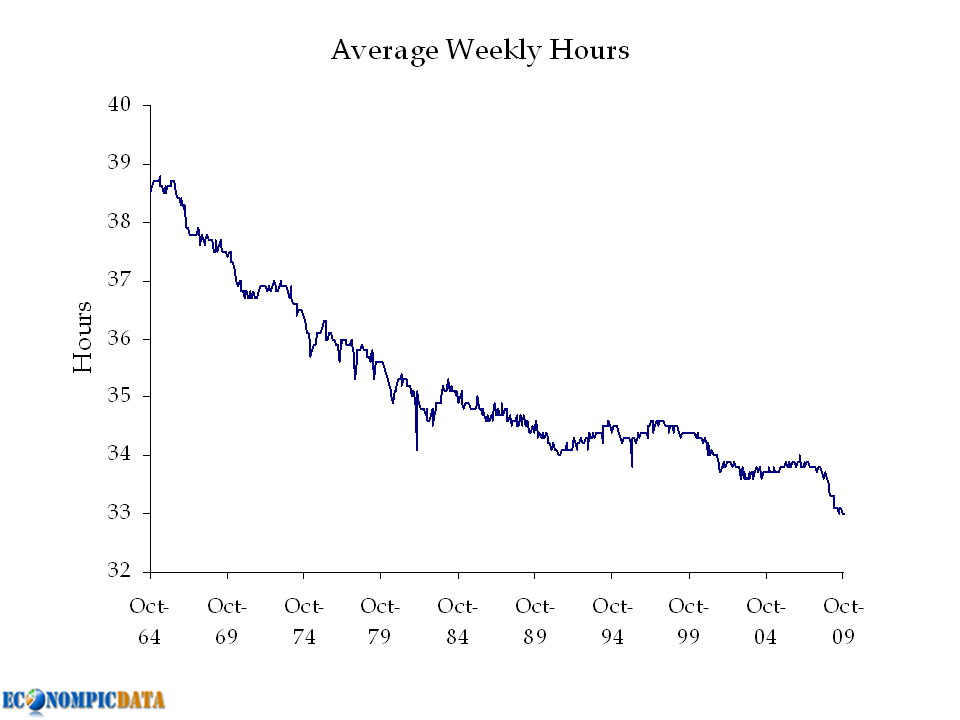 (Image from Ritholtz)
The people of our nation are not working. This is because of a financial crisis. The crisis was caused by inadequately comprehending the values of assorted financial instruments and consequent recklessness in trading them.
Two thirds of all the economic activity in America is consumer spending. Jobless folks are way less likely to spend than their employed counterparts. And even employed folks who fear unemployment are less likely to buy stuff.
Loosen accounting rules? Sure. That's a great idea.
Friday, October 16, 2009
Dallas gallery hopping
I prowled the scene this afternoon. Here's what I saw and thought.
At Barry Whistler Gallery, Lawrence Lee is still up and shining with some of the most elegant lines I've gazed upon since I first got acquainted with Fragonard's tree drawings back in the days of Bush I. Lee mines old racist depictions of African Americans and his supple imagination to produce some truly witty narrative-based graphite and ink and tea and who knows what drawings of crazy-assed tall tales that probably make sense only to him. So why tell the stories? Because they look great. And there's always that astonishing line of his.
 The image above is from Lee's show at the now-defunct Clementine Gallery in Chelsea a couple of years ago. He's getting better.
Road Agent may or may not be defunct also. It still has the "Installation in Progress" sign on the door from last month. As I understand it, gallery owner Christina Rees has accepted a position as director at TCU's off-campus exhibition space over in Fort Worth.
Fort Worth 1, Dallas 0.
Dunn and Brown is offering Dale Chihuly glass stuff to discerning folks in the Metroplex. Why? I don't know. Maybe the bills are coming due. Still they had a kickass small group show in their "project" space with works by Trenton Hancock (whom I love and not just because he once speculated that everybody's soul looks like a pre-teen Caucasian girl), Jeff Elrod, Erick Swinson, Vernon Fisher, etc.
Swinson's savagely trompe l'oeil sculptures of a pre-hominid creature and a stag shaking off the bleeding"velvet" from its new antlers take the Halloween prize for amazingness and craft.
Down in the Design district, Conduit offered Michael Tole and Joe Mancuso. Too many flowers on one picture plane (yes, that's the point) and painstaking renderings of Chinese decor. Cool, but why? I can't say. Somebody tell me.
I tried to see the new stuff by Dornith Doherty at Holly Johnson, but the place was temporarily shut when I dropped by. Should have called first, I guess.
Over at Marty Walker, I caught a sneak peek of William Lamson's new work, and it was a pleasure. Building on his videos from last year, he set up several ad hoc machines designed to use wind and waves to make drawings during his recent tour of South America. The Chilean coast wave works were delicate and appropriately atmospheric. Others were bolder and more aggressively "expressionistic." Whatever that might mean when a kite is doing the expressing.

Above: William Lamson, Kite Drawing Jan. 31, 2009. 740-915 PM. Colonia Valdense, Uruguay.
The Goss Michael Foundation offered a small Mark Quinn survey. He's the dude who cast his own head in his own blood. If he makes it, he means it. Got it?
Quinn's Mother and Child (Alison and Parys), 2008, a marble sculpture of a nude woman and her baby, was an extraordinary thing to behold. Handsome and at peace with her body, Alison was born without arms and with improperly formed legs. Gallery literature quotes him as saying "She's very beautiful, she just looks different."

He's right.
At Barry Whistler Gallery, Lawrence Lee is still up and shining with some of the most elegant lines I've gazed upon since I first got acquainted with Fragonard's tree drawings back in the days of Bush I. Lee mines old racist depictions of African Americans and his supple imagination to produce some truly witty narrative-based graphite and ink and tea and who knows what drawings of crazy-assed tall tales that probably make sense only to him. So why tell the stories? Because they look great. And there's always that astonishing line of his.
 The image above is from Lee's show at the now-defunct Clementine Gallery in Chelsea a couple of years ago. He's getting better.
Road Agent may or may not be defunct also. It still has the "Installation in Progress" sign on the door from last month. As I understand it, gallery owner Christina Rees has accepted a position as director at TCU's off-campus exhibition space over in Fort Worth.
Fort Worth 1, Dallas 0.
Dunn and Brown is offering Dale Chihuly glass stuff to discerning folks in the Metroplex. Why? I don't know. Maybe the bills are coming due. Still they had a kickass small group show in their "project" space with works by Trenton Hancock (whom I love and not just because he once speculated that everybody's soul looks like a pre-teen Caucasian girl), Jeff Elrod, Erick Swinson, Vernon Fisher, etc.
Swinson's savagely trompe l'oeil sculptures of a pre-hominid creature and a stag shaking off the bleeding"velvet" from its new antlers take the Halloween prize for amazingness and craft.
Down in the Design district, Conduit offered Michael Tole and Joe Mancuso. Too many flowers on one picture plane (yes, that's the point) and painstaking renderings of Chinese decor. Cool, but why? I can't say. Somebody tell me.
I tried to see the new stuff by Dornith Doherty at Holly Johnson, but the place was temporarily shut when I dropped by. Should have called first, I guess.
Over at Marty Walker, I caught a sneak peek of William Lamson's new work, and it was a pleasure. Building on his videos from last year, he set up several ad hoc machines designed to use wind and waves to make drawings during his recent tour of South America. The Chilean coast wave works were delicate and appropriately atmospheric. Others were bolder and more aggressively "expressionistic." Whatever that might mean when a kite is doing the expressing.

Above: William Lamson, Kite Drawing Jan. 31, 2009. 740-915 PM. Colonia Valdense, Uruguay.
The Goss Michael Foundation offered a small Mark Quinn survey. He's the dude who cast his own head in his own blood. If he makes it, he means it. Got it?
Quinn's Mother and Child (Alison and Parys), 2008, a marble sculpture of a nude woman and her baby, was an extraordinary thing to behold. Handsome and at peace with her body, Alison was born without arms and with improperly formed legs. Gallery literature quotes him as saying "She's very beautiful, she just looks different."
He's right.
Sunday, October 4, 2009
A food show
My piece is up and running at Project Gallery in Wichita, and I'm quite satisfied with it. Here's a quick, down-and-dirty edit of some installation shots.
The opening was Friday night. Saturday, the gallery organized a potluck dinner. Everybody brought something to share. My wife and I brought some homemade, locally sourced food: home cured bacon, home cured pastrami, a salad of purple hull peas we grew in the community garden, some home canned okra pickles, and some home canned pickled watermelon rind.
I fried the bacon for about the first half hour of the event, feeling a little bit like Rirkrit Tiravanija, but sillier and more bacon-y.
It was a lovely weekend.
Sunday, September 13, 2009
Cow Hill tonight
 (Image from Keri Oldham's Web site)
I'm just back in from the front porch, the coyotes are howling out on the prairie and the street out front is damp. It shines under the lamps.
Last night we attended an opening for Peter Barrickman and Keri Oldham at Centraltrak in Dallas. Keri used to be a gallery manager at the now defunct And/Or Gallery. I reviewed a show they had last spring. Keri's watercolors are endearingly creepy, a blend of fashion illustration and automatic drawing where somatotype and psyche meet on an uncomfortable picture plane.
Barrickman's work is all over the map, but the fractured and squashed pictorial space of a landscape and idiosyncratic expression would seem to be his interest. Not surprisingly, collage enters into the mix often. Collage can do that to space.
At present, I'm imagining a review of Amy Blakemore's show at the Museum of Fine Arts, Houston. The magazine's deadline is Tuesday, and it's not yet written. Tonight I'm thinking of remembering the times I was disabused of comforting, but false, notions of how the world is. Amy's pictures are like that. Hard as stone and sweetly, achingly melancholy. Here's a beautiful picture. You loved him. He's dead. But still you love him. Let this picture's beauty comfort your loss. It's not love, but beauty is at least something.
Monday, August 31, 2009
Houston trip -- two kinds of strangeness

My wife and drove to Houston last weekend to see the Amy Blakemore show at the Museum of Fine Arts, Houston and to spend a little time away from this tiny town.
Blakemore's photos are powerful evocations of disillusionment and fading memories. Some of them are evocative of the emotional content in James Joyce's short story "Araby" in their sense of melancholy epiphany: "I thought it would be better, more than this..." Other times, her blurred and granular exposures suggest tilt shift digital photo processing. Always they are strange and haunting.

(Images via Inman Gallery)
Before we left for home this morning, we visited a Salvation Army thrift store on Washington Ave. in Houston because of an article I'd read in the NY Times about some works said to be by Salvador Dali that are up for sale there. Opinions vary concerning their authenticity, naturally, but I've seen them in situ. The drawing, sculpture, and prints are indeed on display in a glass case in the thrift store.


I took some pictures of the display, and my wife got a real bargain on a light sweater and some tops.
Friday, August 28, 2009
Ted Kennedy

Here's a bit from an admittedly liberal blog. When he attended the funeral of murdered Israeli PM Rabin, Ted Kennedy quietly placed earth from the graves of his brothers on the grave of the slain peacemaker. His brothers were known to us all as political figures which we associated with certain ideals, but he knew them as his brothers. Blood kin. The dirt was not just dirt. It meant something, if only privately
Ted Kennedy's sins and transgressions were very public. His position of privilege got him out of some really bad situations that none of us could have hoped to escape, and these situations were largely of his own making. These facts offend the small d democrats of America. We hate class privilege. It isn't right. Well it isn't.
And yet he did accomplish some really good things in his many years in the senate. At least I think much of what he did was good. He was a major influence on the laws of our country, shaping them in ways that served to uplift and make better the lives of people who were decidedly not privileged. Here's some of what he did: Title IX (gender equality in college athletics), the ADA, race-blind immigration legislation, bilingual education, Meals on Wheels, the National Commission on the Protection of Human Subjects (in med/sci experiments), stopping military aid to the fascist Pinochet regime in Chile, education for children with disabilities, expanding the civil rights act to protect persons with disabilities, the Civil Rights for Institutionalized Persons Act, the Refugee Act of 1980 (asylum for persecuted persons), Employment Opportunities for Disabled Americans Act, the National Military Child Act, Civil Rights Act of 1991, Americorps, Health Insurance Portability and Accountability Act, voted no on war with Iraq (one of 23 senators who did so).
Most of what he accomplished, he accomplished after that evil night at Chappaquiddick when Mary Jo Kopechne died. It is as though he had begun as the callow, drunken libertine his enemies call him -- a selfish irresponsible glutton who was rich enough and Kennedy enough to buy his way out of anything with money and social connections. But then something else emerged, something with a will and a capacity to make our nation better. In working to make America better, I think, he may have also worked to make himself better.
I am fully aware that some amongst us do not share my belief that he made our country better, and that is what it is. We will certainly disagree about many other things. It was always so. But the Americorps program has had a very real and beneficial effect on some of the little towns that dot this run-down portion of NE Texas. I've seen it. And allowing people from India and China and Jordan and Mexico to immigrate legally to the US the same as people from Western Europe has truly benefited this nation. Look what's happened to our national cuisine alone. I mean jeez!
Ted Kennedy did that for us. And he came to embody a certain attitude -- love it or hate it or whatever -- which may have died with him. He stood for something. He meant something.
Add to that the fact that he was a Kennedy. He was the son of Joe Kennedy, ambassador and alleged bootlegger millionaire. He was brother to Joe, Jr who died on an Air Corps mission in WWII, and brother to Jack who skippered PT 109 and survived to become a senator and later President of a Camelot White House before his murder. He was brother to Robert, murdered on the night of his triumphal victory in the 1968 California primary -- that terrible year of political murders. He was their blood kin, of their generation. My parents' generation.
And it passed with him.
I recall the November day in 1963 when John Kennedy as killed. We lived in a Dallas suburb at the time. I remember my mother sobbing on her bed. I remember not knowing what to do because I was still just a boy. And now the question arises. Why did she cry? She didn't know him. He was unrelated to her. He was a stranger. He was a glamorous, powerful man with a glamorous wife who lived a life so disconnected from the suburban reality of my mother's existence that they may as well have been separated by an ocean. But she sobbed that November afternoon for what had happened to him. And for what had happened to us. He meant something to us.
I once wrote a review of a show of Warhol's Jackie paintings which was presented in the building Lee Harvey Oswald used for his sniper's perch that awful day. My editor cut a line I'd written about our all being widowed after the killing of our President. But it was the memory of my mother sobbing that led me to write it. How can you explain that to an editor?
When Jackie died years later my mother bought a ticket to Europe. She had to get away even though she was retired and not flush with disposable cash. "That woman was too young to die" she explained. Jackie meant something. True or false, she meant something.
Ted wasn't John. Everybody knows that. He wasn't Bobby either. But he was ours. He was a Kennedy. And he was the last of them.
Thursday, August 20, 2009
Hardiness zones and climate change

The USDA is reportedly redrawing its plant hardiness zone map this year. Last time the map was updated was in 1990, although the National Arboretum Web site does indicate that their map was revised in 2001. The map above is part of an update I found on the National Arbor Day Foundation site. Areas in pink represent territory which had shifted one zone warmer between 1990 and 2006.
I'm making a stencil to plaster the map on a gallery wall to accompany my Twittervore video.
Thursday, August 13, 2009
Twittervore
This is the first minute or so of the Twitter-based video I'm working on. As noted earlier, the pictures were harvested from PingWire which presents images hosted by three sites serving tweeters. I pulled a couple thousand pictures of cooking, eating, and sometimes growing food from the constant image stream over the course of a few weeks in July.
The soundtrack was generated by an iPhone app called Bloom, which was designed by ambient sound guru Brian Eno and programmer and musician Peter Chilvers. The app costs four bucks, but that's considerably less than I'd have to pay Eno for his services.
I jacked the iPhone into a laptop running Audacity and recorded about 22 minutes of digitally generated ambient drones, gongs and chimes, which I next imported into video editing software along with the pictures. Aside from editing out some noise and reorienting a few sideways pictures, the pictures and sound are as they were when I got them. The video presents what the Internet and my iPhone churned out while I was paying attention.
I'm starting to really get off on the whole mashup of found image/found sound and future-cheesy technology. Maybe I should run it on a stack of Commodore monitors.
Sunday, August 9, 2009
Archiving stuff
I've spent some time this afternoon puttering about in Google Docs to see if it can be a useful cloud computing tool. So far, I've uploaded over a dozen art reviews with the intent of sharing them with associates and interested parties. Google made this link to one of them.
Here's another one. And a third.
I'm a lousy archivist of my own work, so I'm hoping this tool proves worthwhile. Now if I could only find the rest of my reviews.
Here's another one. And a third.
I'm a lousy archivist of my own work, so I'm hoping this tool proves worthwhile. Now if I could only find the rest of my reviews.
Saturday, August 1, 2009
Looming destruction
My friend Josie directed me to this video:
She saw a longer version of it last month at the Hirshorn, where the scale of the projection and the audio of the ship crushing through the ice added much to the experience. Even at this diminished scale, the imagery is powerful.
She saw a longer version of it last month at the Hirshorn, where the scale of the projection and the audio of the ship crushing through the ice added much to the experience. Even at this diminished scale, the imagery is powerful.
Sunday, July 26, 2009
Kentridge in Fort Worth
My wife and I paid a visit to the Modern Art Museum of Fort Worth today. We drove to Cow Town to see the William Kentridge show, and holy mother of charcoal, the man is much better than I thought he was. I already knew he was remarkable, but the FW show is a revelation. Here's a version of a film that's in the show:
The title is Journey to the Moon. It may be in the exhibit, but my recollection is that this is not the same film. A room with multiple projected videos offers a variety of related pieces, many of which are titled Fragments for Georges Méliès. Méliès was the film pioneer who created Le Voyage dans la Lune in 1902 -- a landmark in early cinematography and filmic story telling. Coming a century later than Méliès, Kentridge's videos locate the 21st century artist in the history of movie making and conflate drawing, performing and filming. Not to mention conflating artist with model, director with performer, and process with content.
I took some notes today, but I need another shot at it all before I can review it. Two and a half hours in the museum wasn't enough. That's one of the troubles with video. Duration is like that -- it just takes time to haul it all in. We'll hit it again tomorrow after we check out of the motel.
Sunday, July 19, 2009
More raw footage
PingWire is a live feed of all images posted to one of three sites that host pictures for Twitter users. This means that anything of interest to tweeters for any reason (love, hate, desire, fear, you name it) appears on the site once it has gone through the uploading and publishing process. PingWire offers a glimpse into the collective mind of a significant subset of the Internet -- a visual guide to the unconscious. Like the Internet is dreaming.
Porn is there, of course. So are injuries, tourist destinations, and boyfriends. Last week there were scores of pictures sighted down the picture takers' supine legs at assorted beaches.
It turns out that a sizeable portion of the pictures tweeters share with the world involve food -- eating, cooking, and sometimes growing food. Some photos document a pretty child eating an ice cream cone. Some show empty plates. Others offer scrumptious desserts or elaborate platters of sushi.
Their motives vary widely. Some images appear because a besotted mother wants to show us her son's reaction to (e.g.) a crate of strawberries. Some are offered by disgusted patrons repulsed by the fare at a sub-standard diner. Some are snarky. Some celebrate pleasures.
Many are badly composed and unfocused. Others are professionally exposed ads for restaurants.
Last week I saved as many food and eating pictures as I could during a few hours spread out over four days. I harvested about 1300 pictures during that time. Today, I imported them into a video that turned out to be a little longer than 11 minutes at 1/2 second per image. There is no sound so far, and I'm probably going to rework it considerably, but even the raw footage is interesting to me.
At least it is tonight.
Friday, July 17, 2009

Wednesday, July 15, 2009
Subscribe to:
Posts (Atom)
